Tune It Out
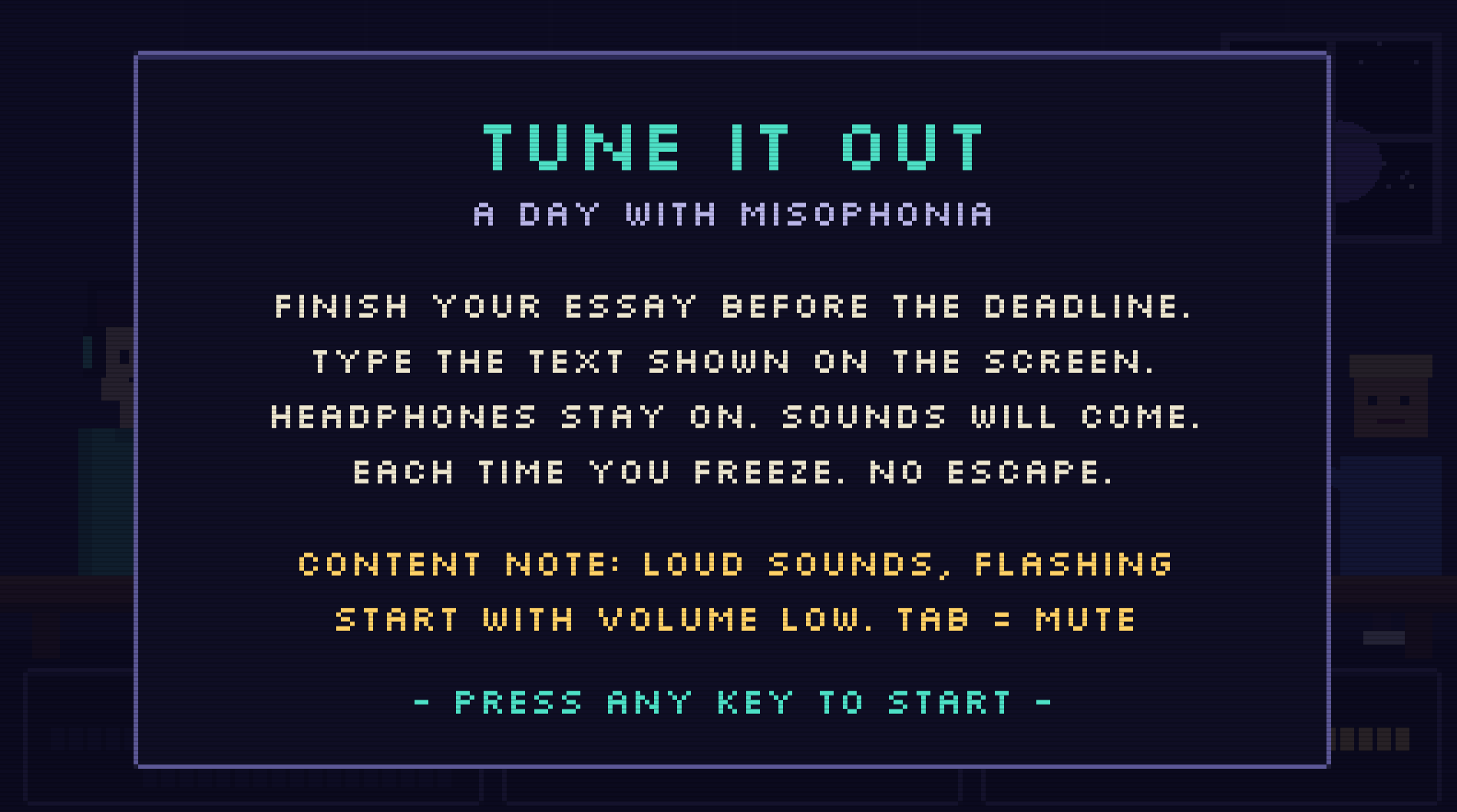
Module 5A misophonia awareness game exploring how repeated sound triggers can disrupt an everyday task.
View projectNo mixes added yet.
Explore SoundCloudSelected creative work, from research and interactive experiences to music, art installations and documentary filmmaking.
A misophonia awareness game exploring how repeated sound triggers can disrupt an everyday task.
View project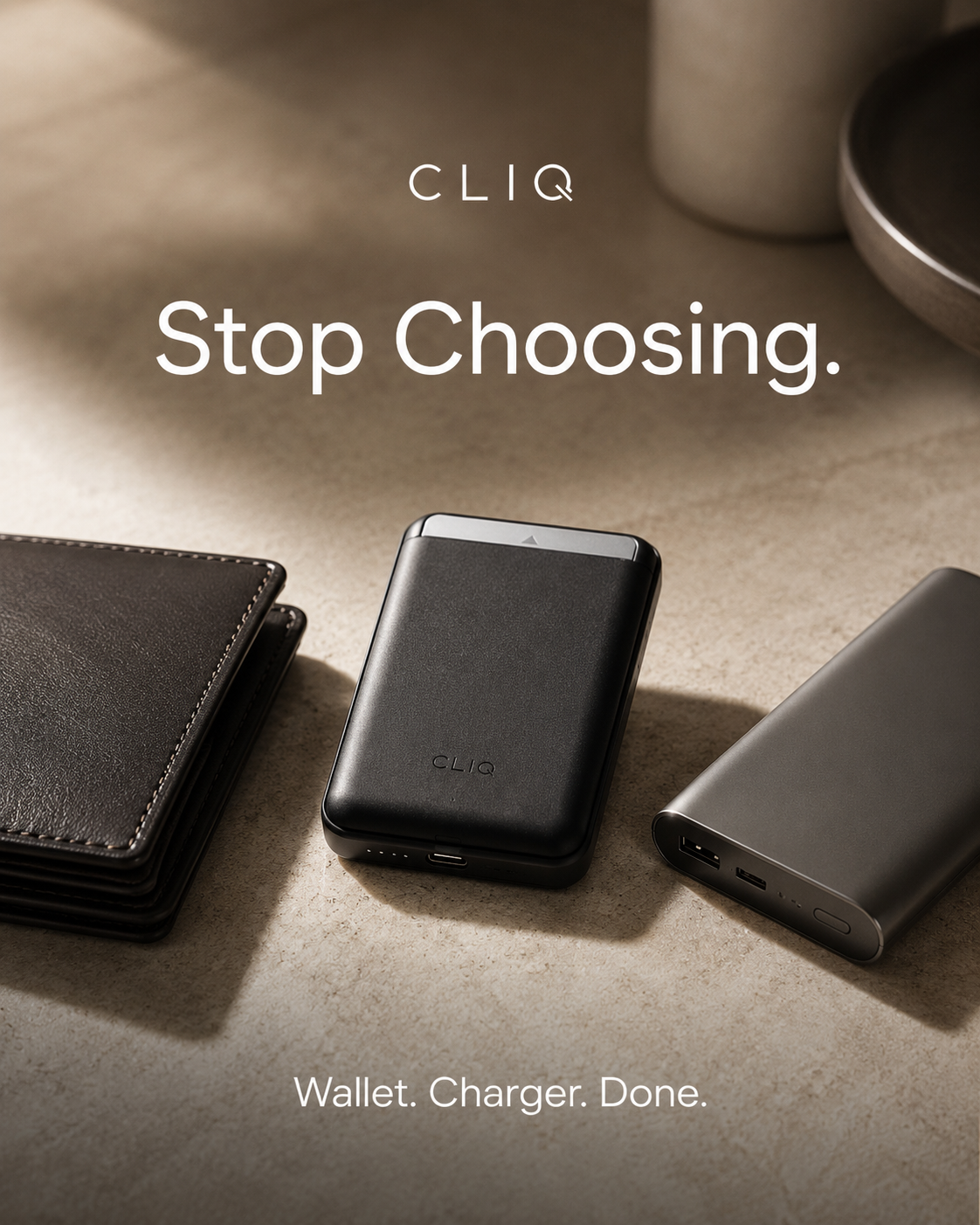
An independently developed product and brand concept combining a MagSafe cardholder and power bank.
View project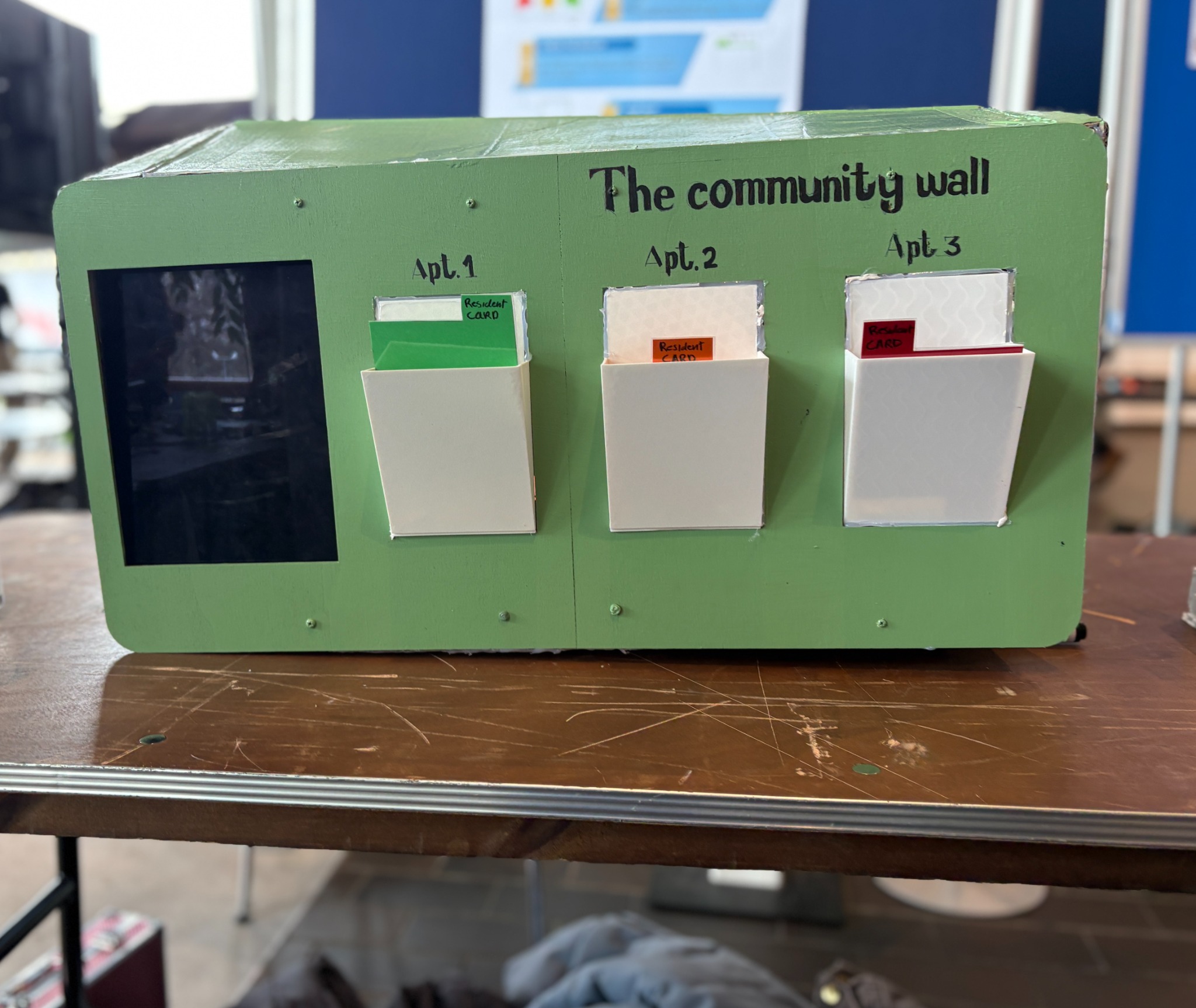
A group project with Amsterdam Police, exploring how neighbours can communicate and support each other during power outages.
View project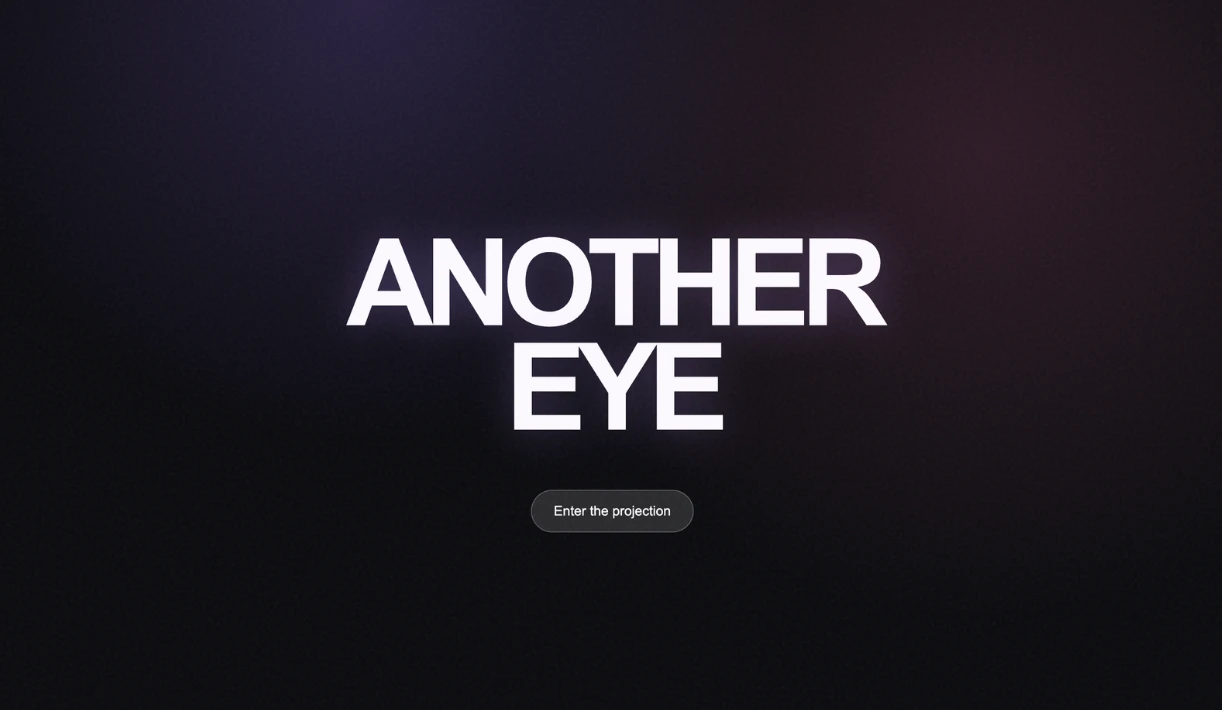
An interactive installation exploring personality through abstract visuals, sound and intuitive choices.
View project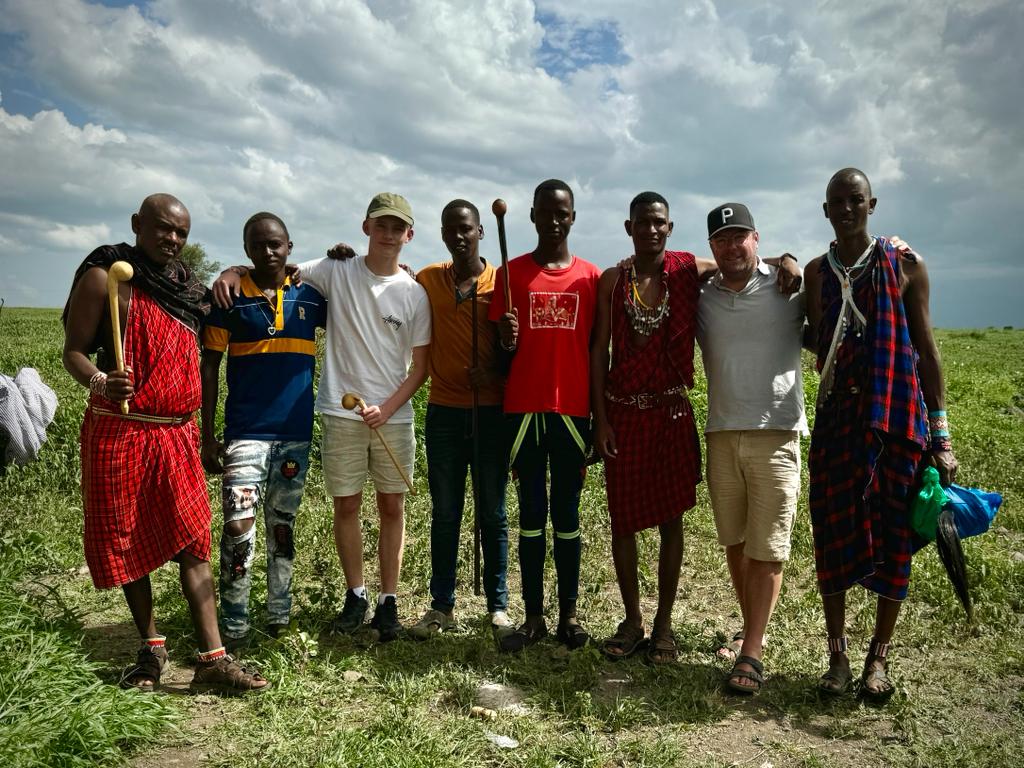
A documentary made in Kenya, exploring drought and its effects on young people.
Watch documentarySmaller projects and experiments, organised by module.
A gallery of smaller projects and experiments from my time studying Creative Technology, organised by university module.
A video project around staying active and exercising.
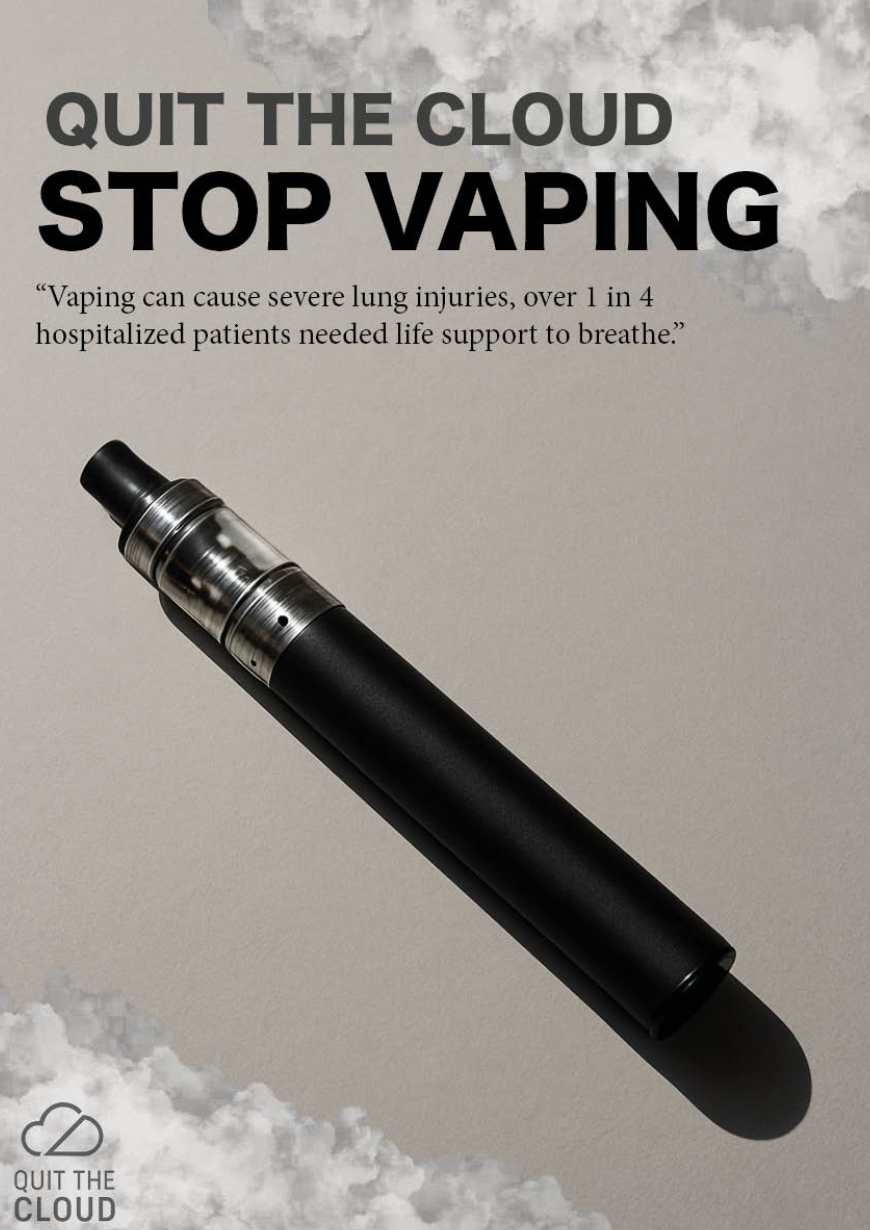
An anti-vaping poster exploring how image and typography communicate a campaign message.
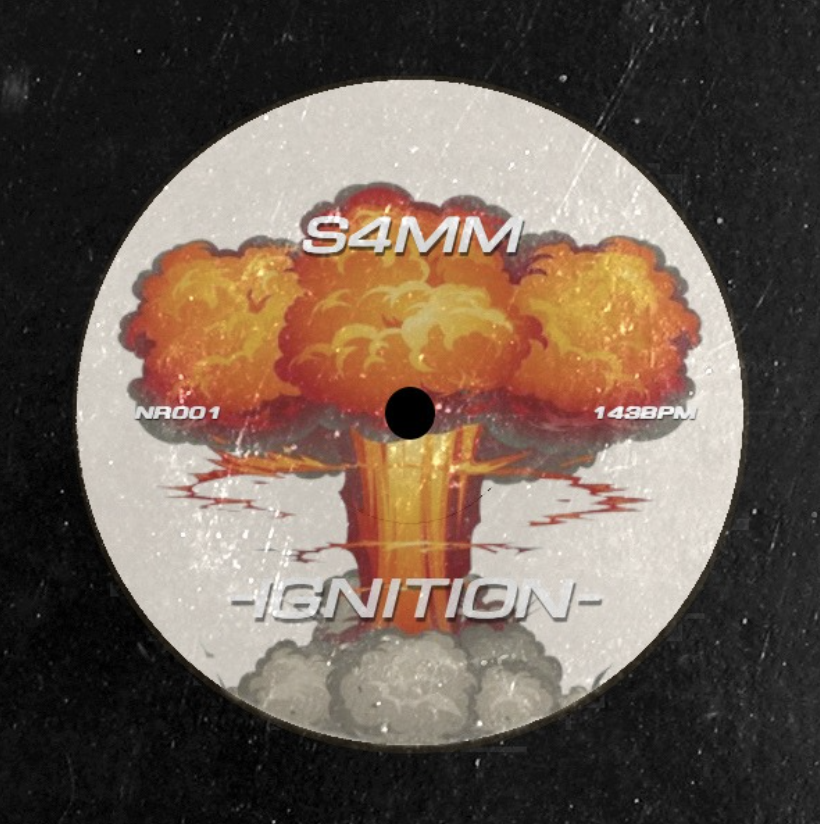
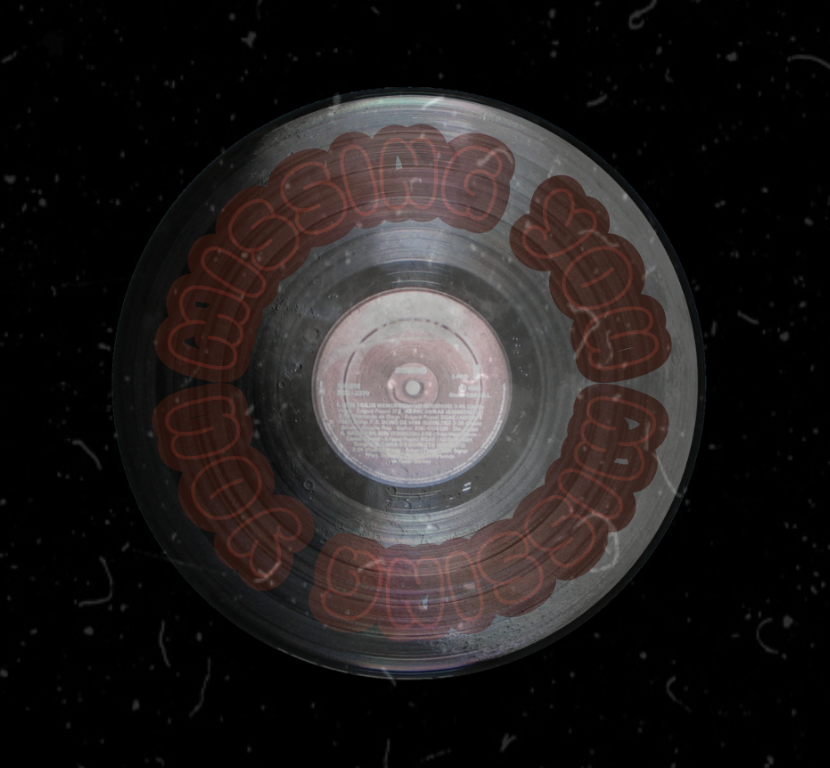
Two explorations of record artwork, combining typography, imagery and textured surfaces.
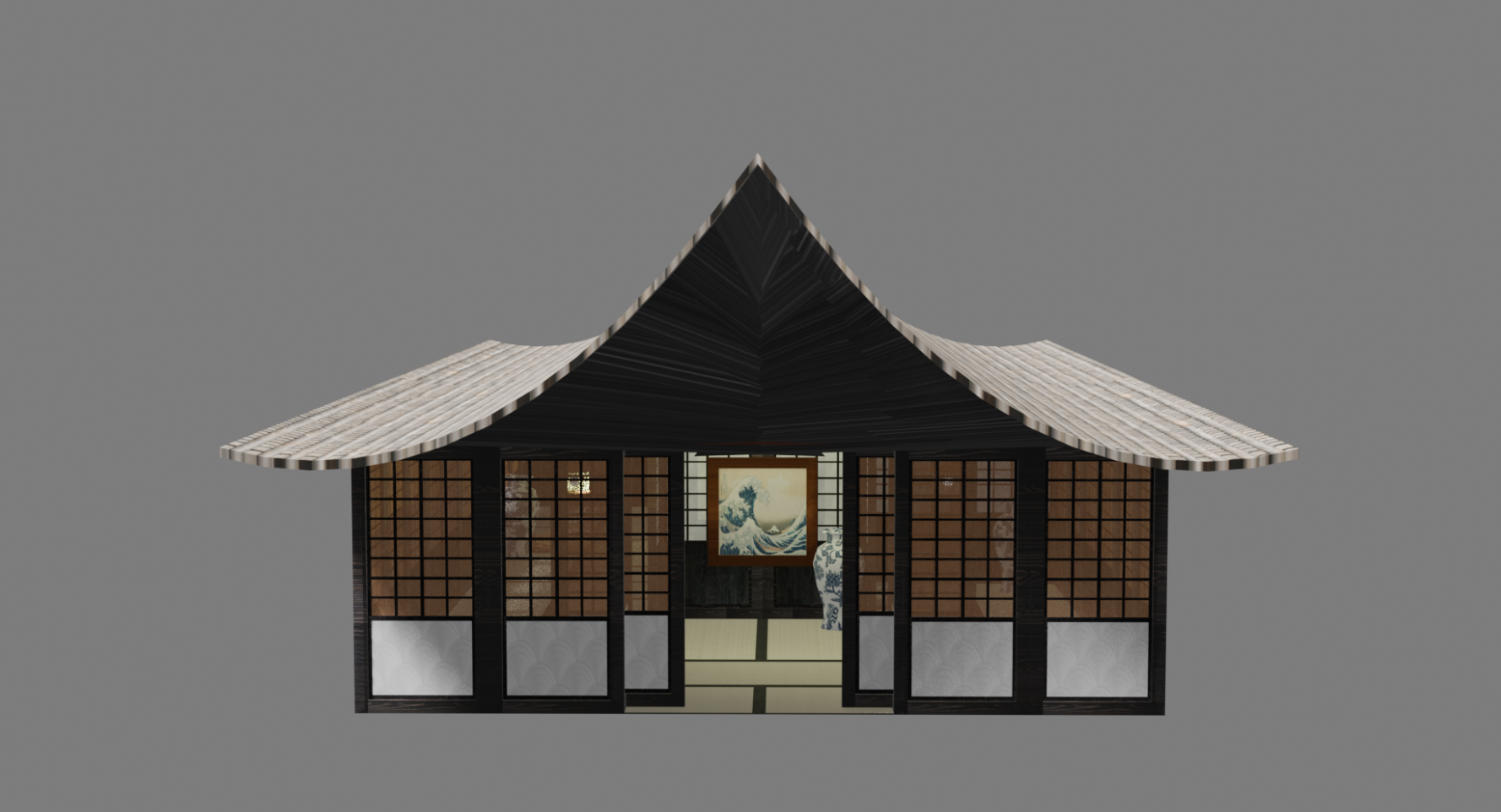
A Japanese-inspired house design, exploring architecture, materials and interior details.
An Arduino-based music prototype, connecting physical controls with an arpeggiator.
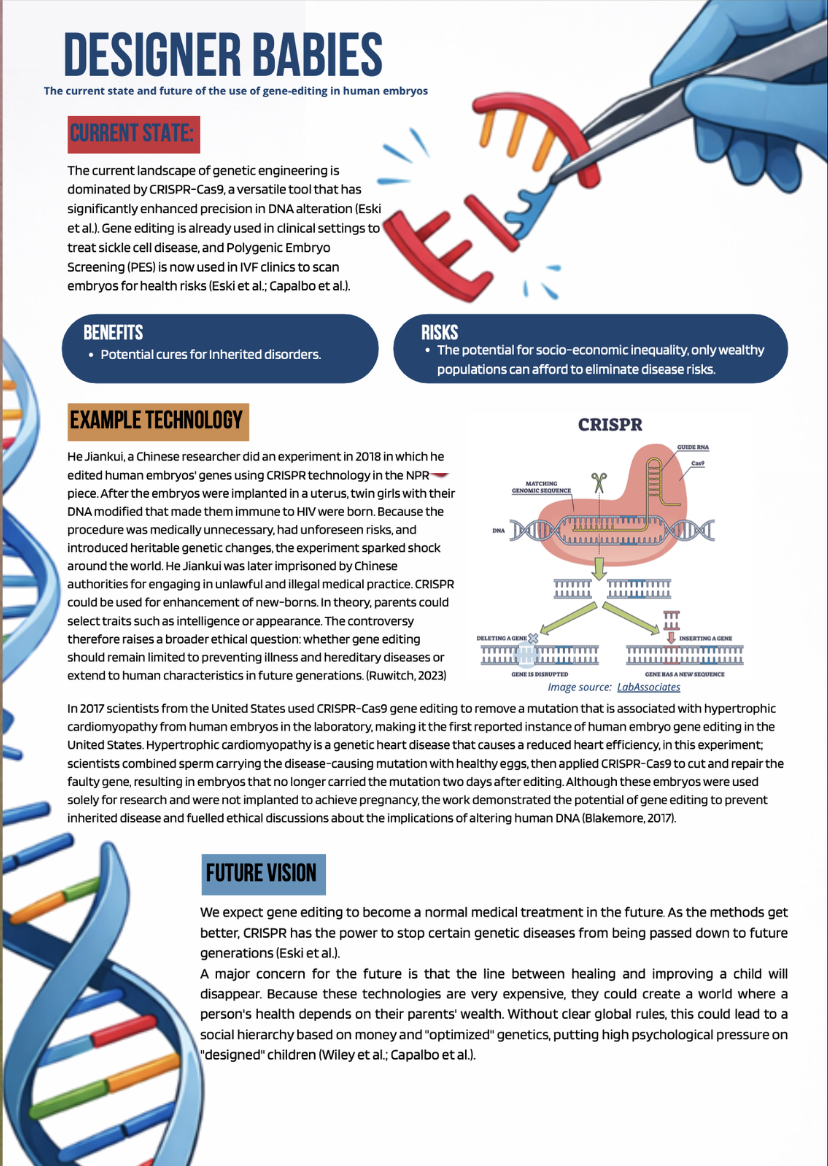
A research poster exploring human embryo gene editing, its possible futures and ethical questions.
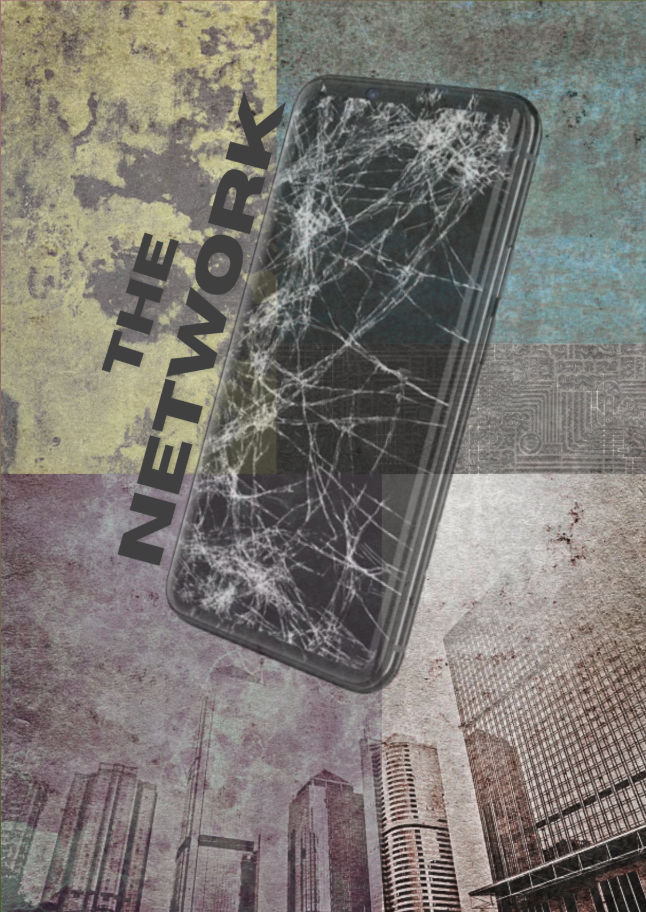
A cover for The Network, combining a cracked phone, city imagery and layered textures.
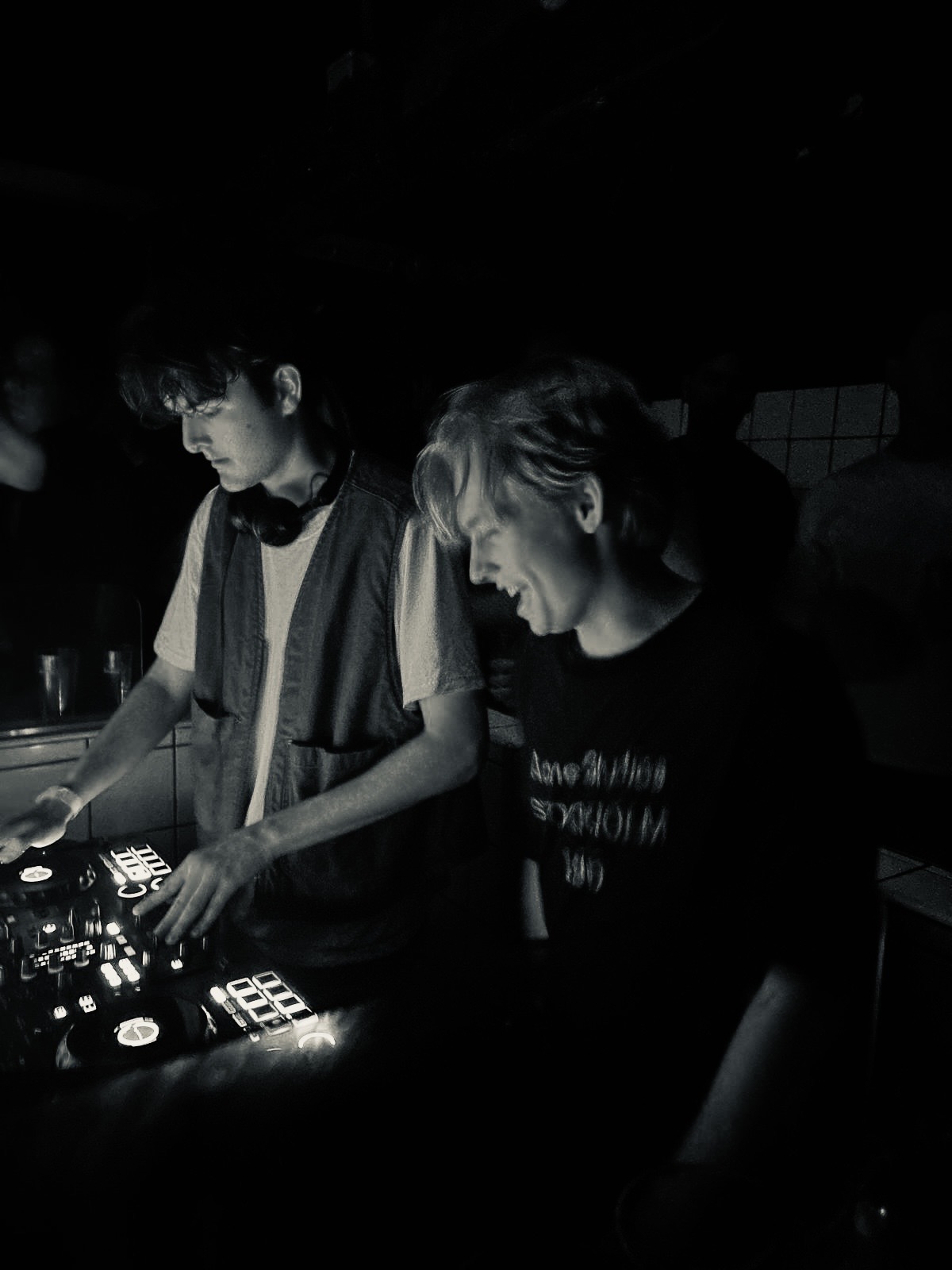
I’m Sam de Lange, a DJ and music producer making music under the name BRONKZY. I’ve been producing for over three years, driven by a passion for creating things that feel like me and sharing that feeling with others. Through my music, I want to take people on a journey filled with euphoria, unexpected moments and emotion, leaving them with a feeling of happiness.
I study Creative Technology at VU Amsterdam, in partnership with the University of Twente. I’m always looking for ways to bring what I learn into my music. During my studies, I want to explore projects around music, lighting, DJing and club culture, experimenting with new ways to shape those experiences.
Listen to my musicFor music, collaborations and bookings.
bronkzymusic@gmail.comYour message has been submitted. I’ll get back to you soon.
Look out for a confirmation email, and check your spam folder if it doesn’t arrive.
Back to the startAn awareness game for people without misophonia, designed to encourage greater understanding of how sound triggers can affect everyday life.
I proposed misophonia as the condition we would explore. Through digital ethnography, our group researched what people with misophonia struggle with and identified possible design opportunities.
This research became the starting point for our group’s brainstorming. We wanted to create something that could help people without misophonia better understand the experiences described in the research.
During brainstorming, I suggested creating a game or experience for people without misophonia. My main contribution was conceptualising the idea and thinking through its purpose and overall experience.
The research and development were group work. I did not code the whole game; my role centred on developing the concept and helping shape the direction of the project.
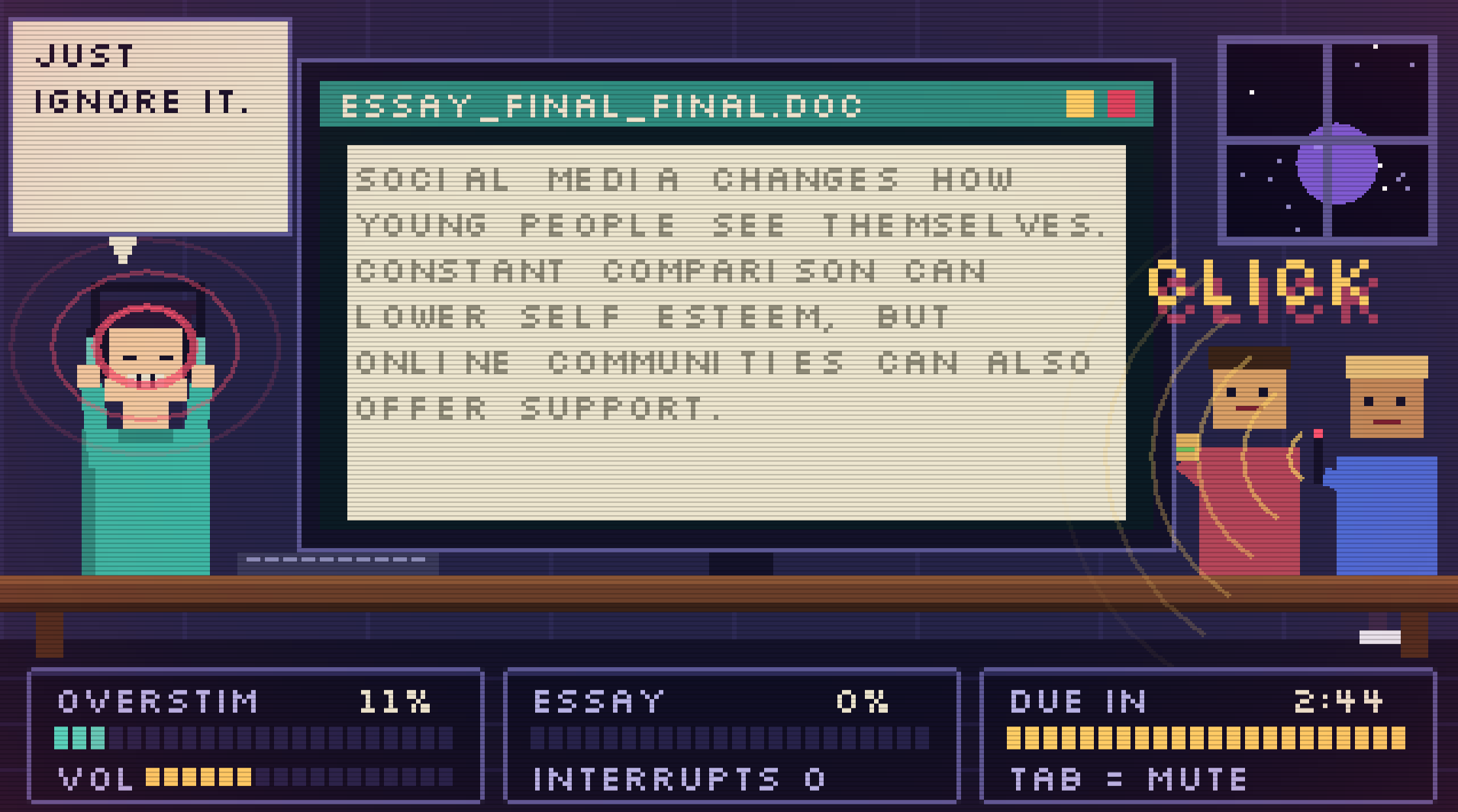
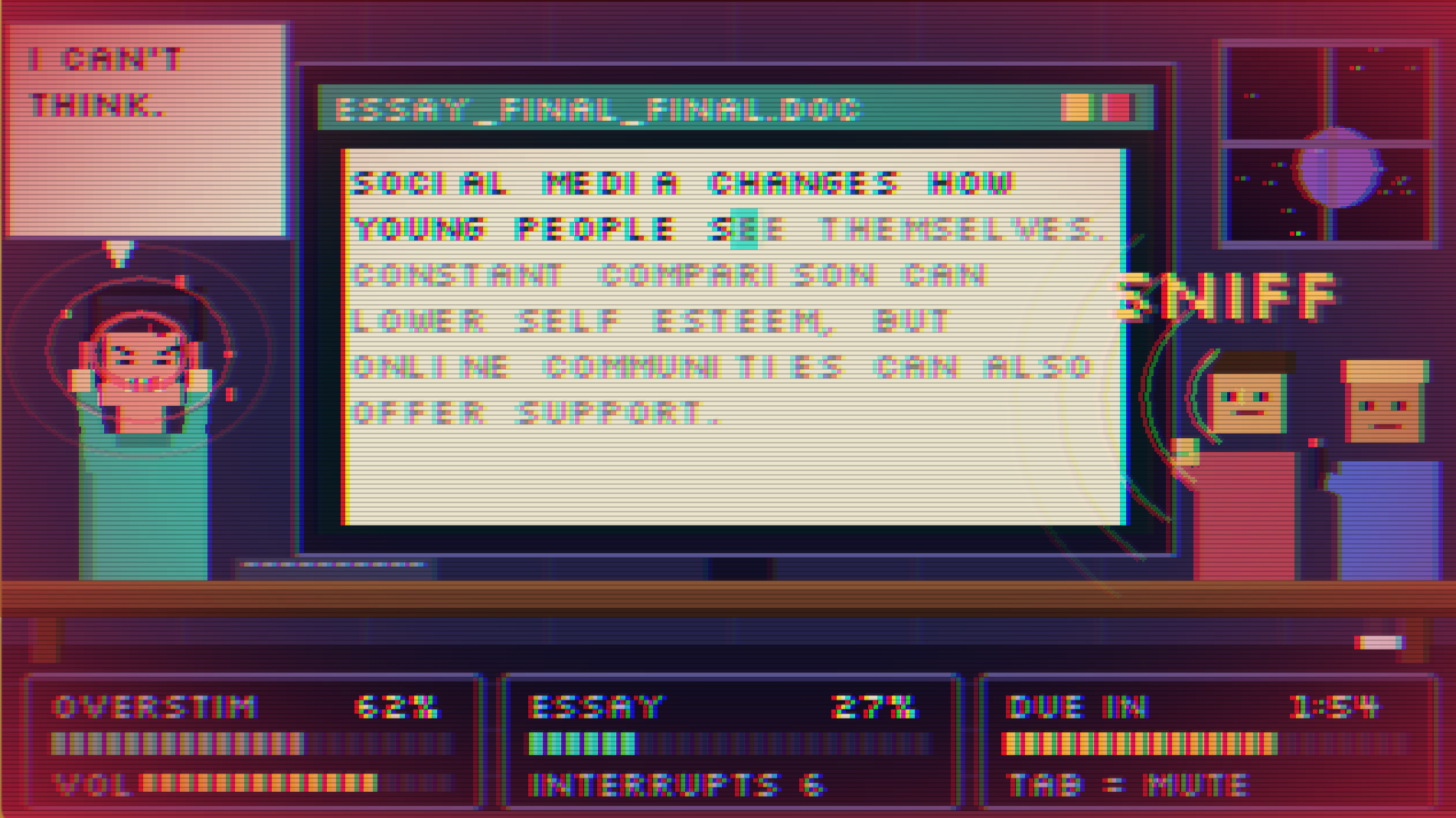
In Tune It Out, the player is a student trying to type an essay before a deadline. Chewing, pen clicking, foot tapping and sniffing interrupt the task.
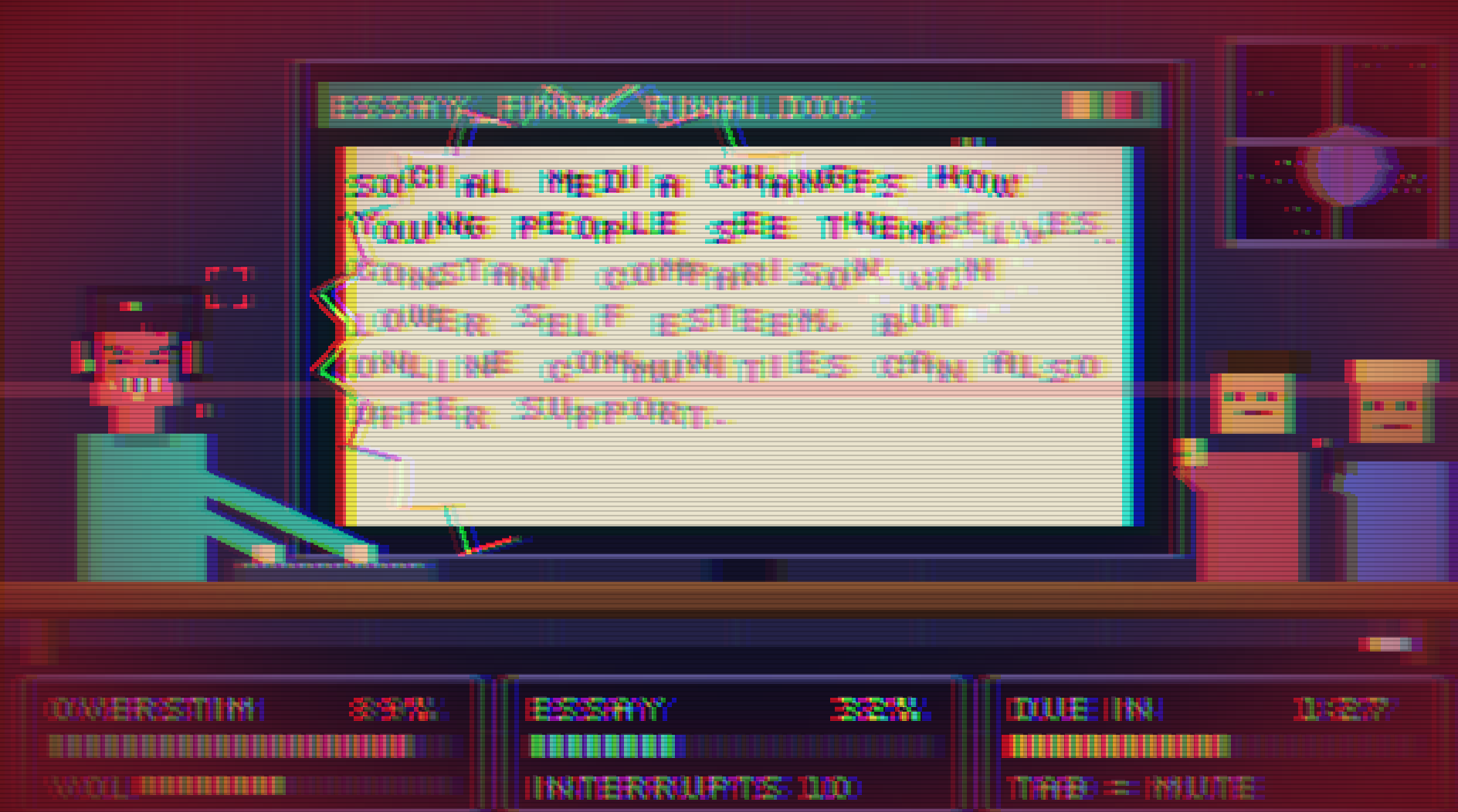
During each trigger, typing is temporarily blocked. As the game’s stress level rises, the sound intensifies and visual distortion makes the text harder to read. The interface tracks essay progress, interruptions, time remaining and overstimulation.
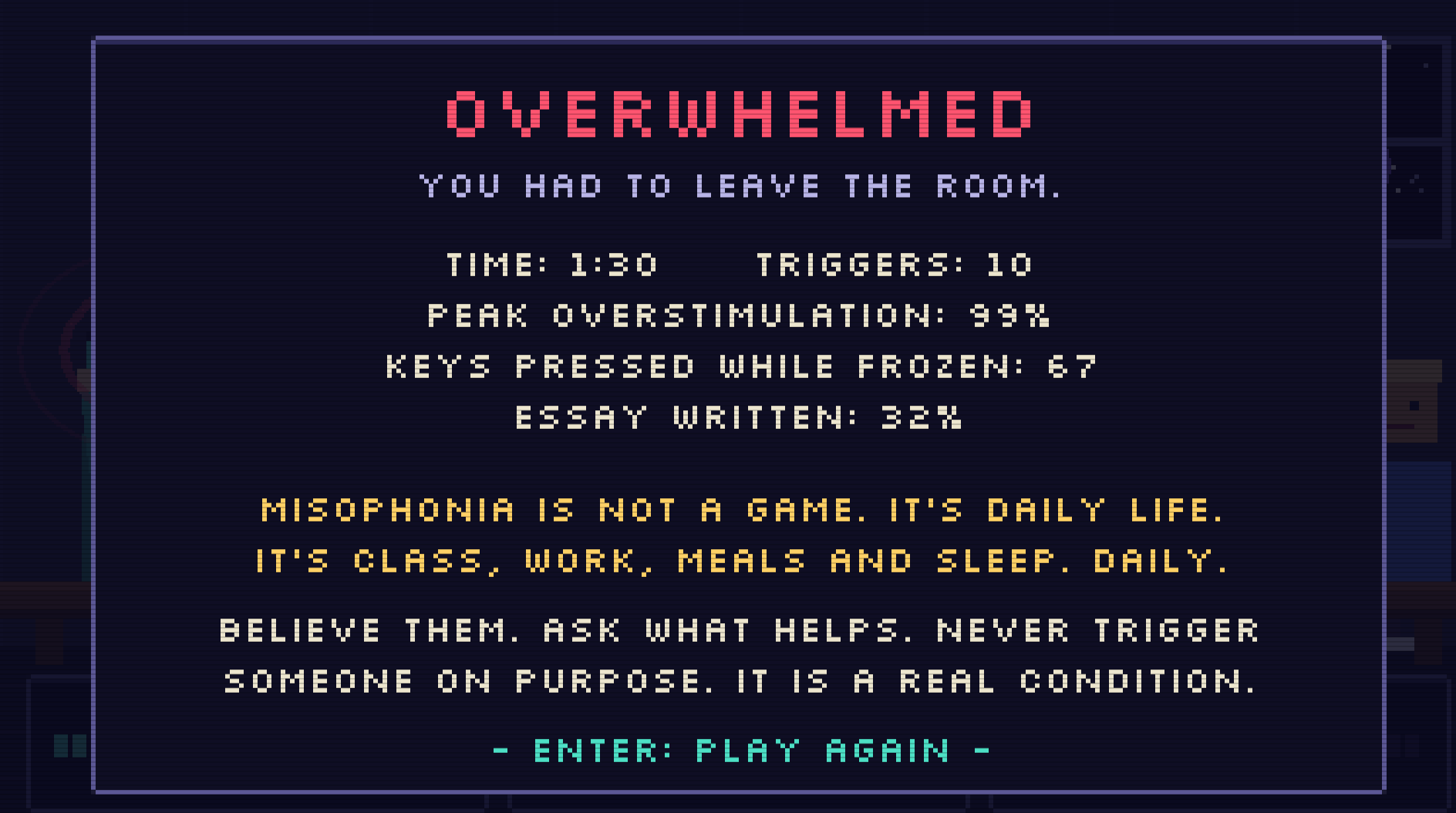
The game ends when the essay is finished, the deadline passes or the character becomes overwhelmed. Each ending shows the player’s results and closes with a message encouraging them to believe people with misophonia, ask what helps and avoid deliberately triggering them.
The prototype uses an intentionally simplified interaction to communicate interruption and difficulty concentrating. It represents the group’s design interpretation, rather than the experience of every person with misophonia.
The intended outcome is greater awareness and understanding. Demonstrating whether the game achieves that would require feedback and evaluation with players and people with misophonia.
I learned that when designing around a condition and experiences that are deeply personal, one game cannot represent everyone. Recognising that was an important part of this project.
If I could improve the game, I would focus on representing misophonia more specifically. I feel that the current prototype stays at a surface level: its sounds communicate general annoyance, rather than convincingly representing the specific triggers experienced by people with misophonia.
A product and brand concept bringing card storage and portable charging together in one MagSafe accessory.
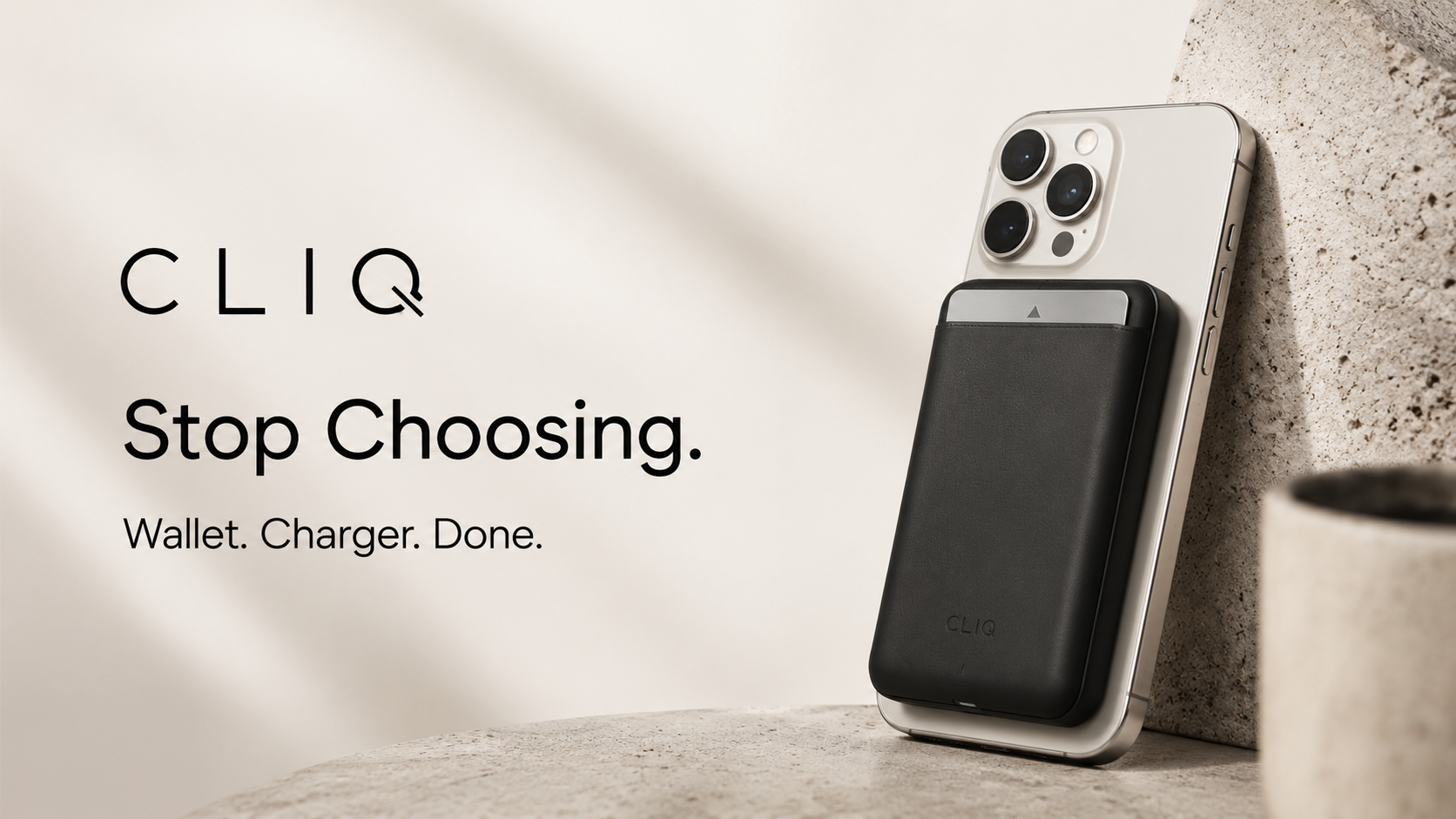
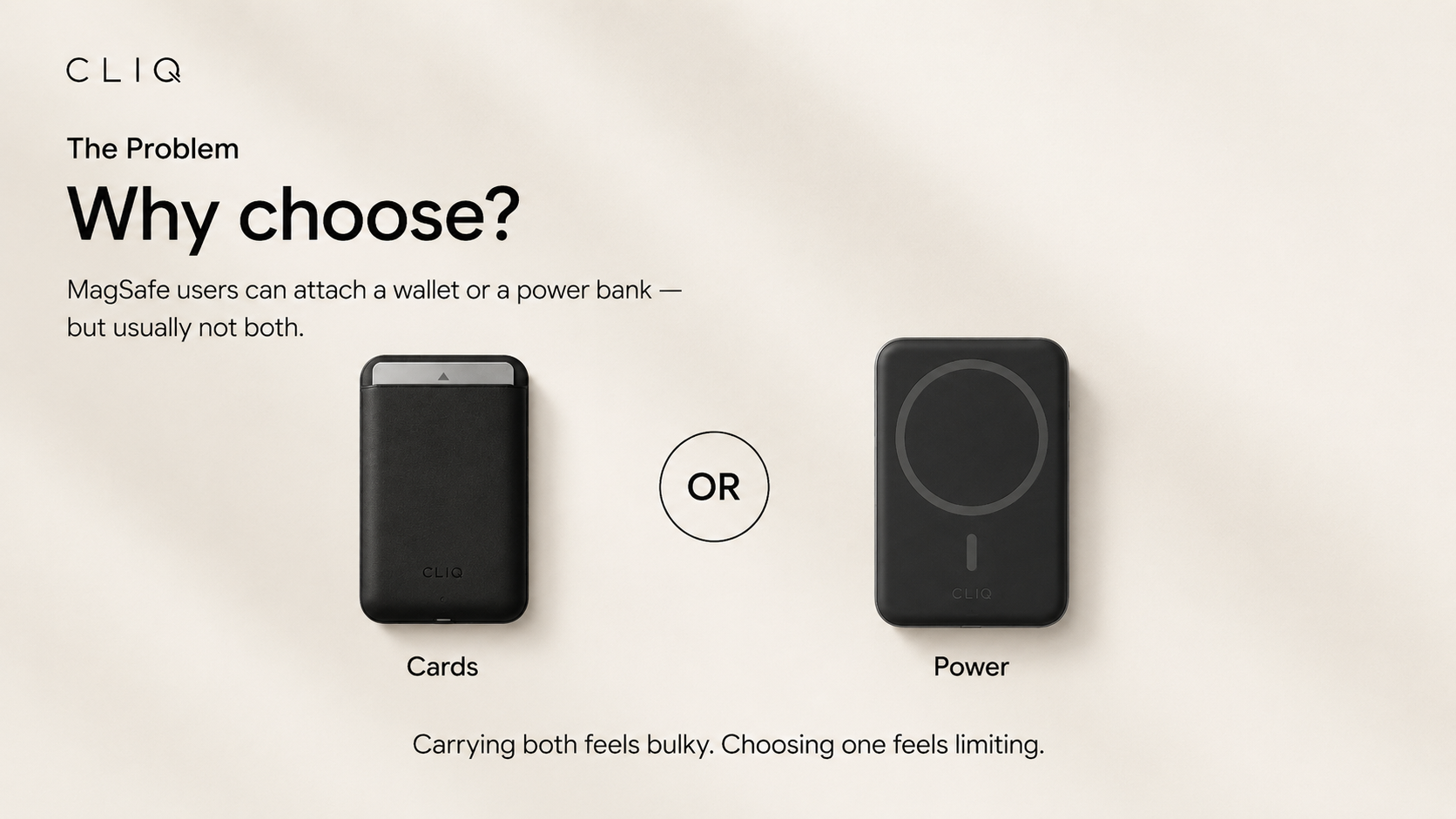
The project began with a question about everyday carry: why choose between a cardholder and a portable charger?
CLIQ’s problem framing focused on MagSafe accessories that serve one of those needs at a time. The concept explores bringing both functions together, aiming to reduce the need to carry separate accessories.
I worked on CLIQ independently. The project combines a product idea with a visual identity and a way to communicate its purpose.
The concept positions CLIQ as a combined MagSafe cardholder and power bank for iPhone users. The supplied visualisations explore how that idea could appear as a product, in packaging and in everyday settings.
The brand direction centred on simplicity, freedom, identity and freshness. The visuals use a restrained wordmark, warm neutral colours and a dark product finish.
The campaign makes the idea easy to understand through short messages such as “Stop Choosing” and “Wallet. Charger. Done.” Product-focused images explain the concept, while the café and street scenes explore its place in everyday life.
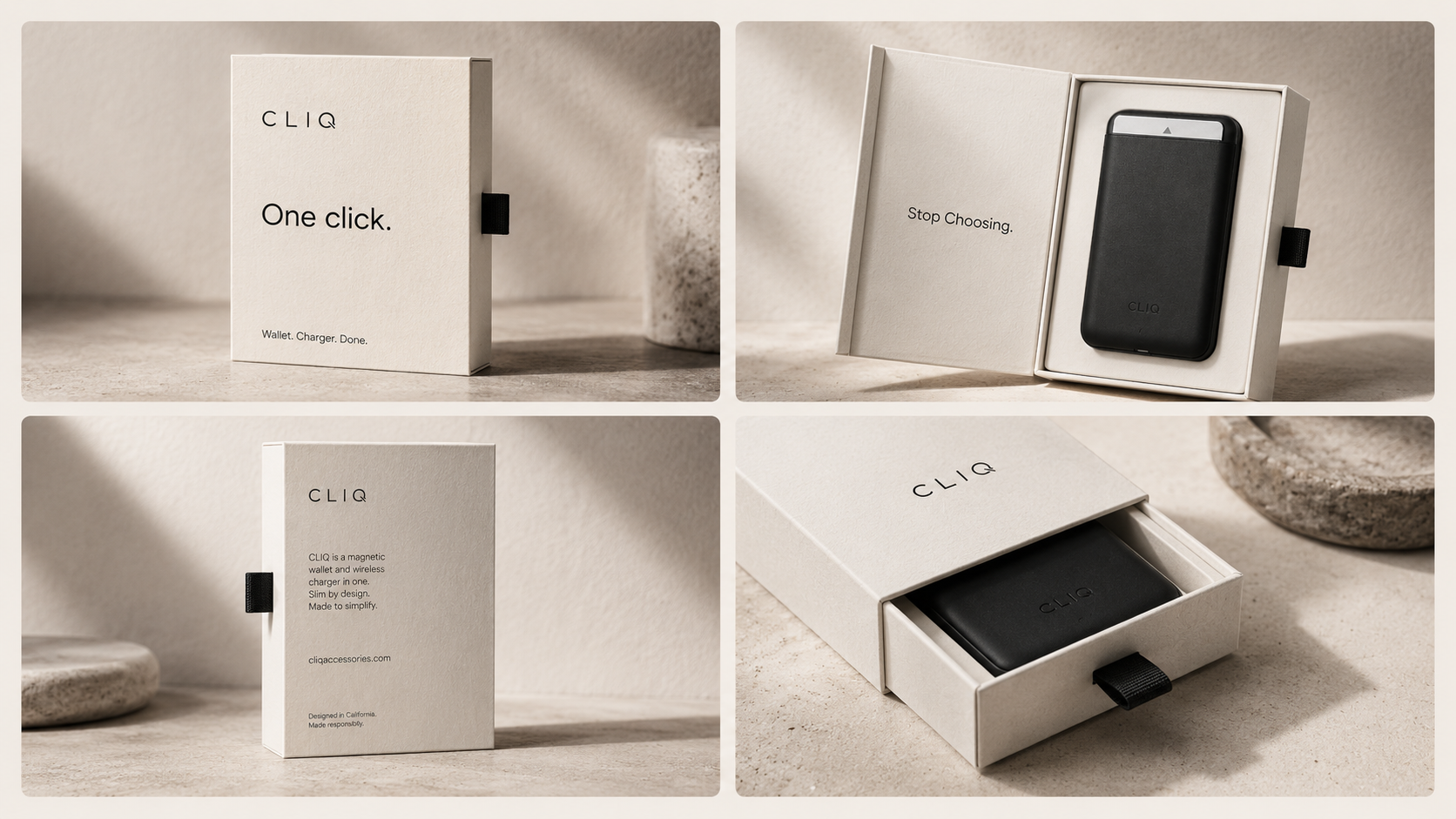
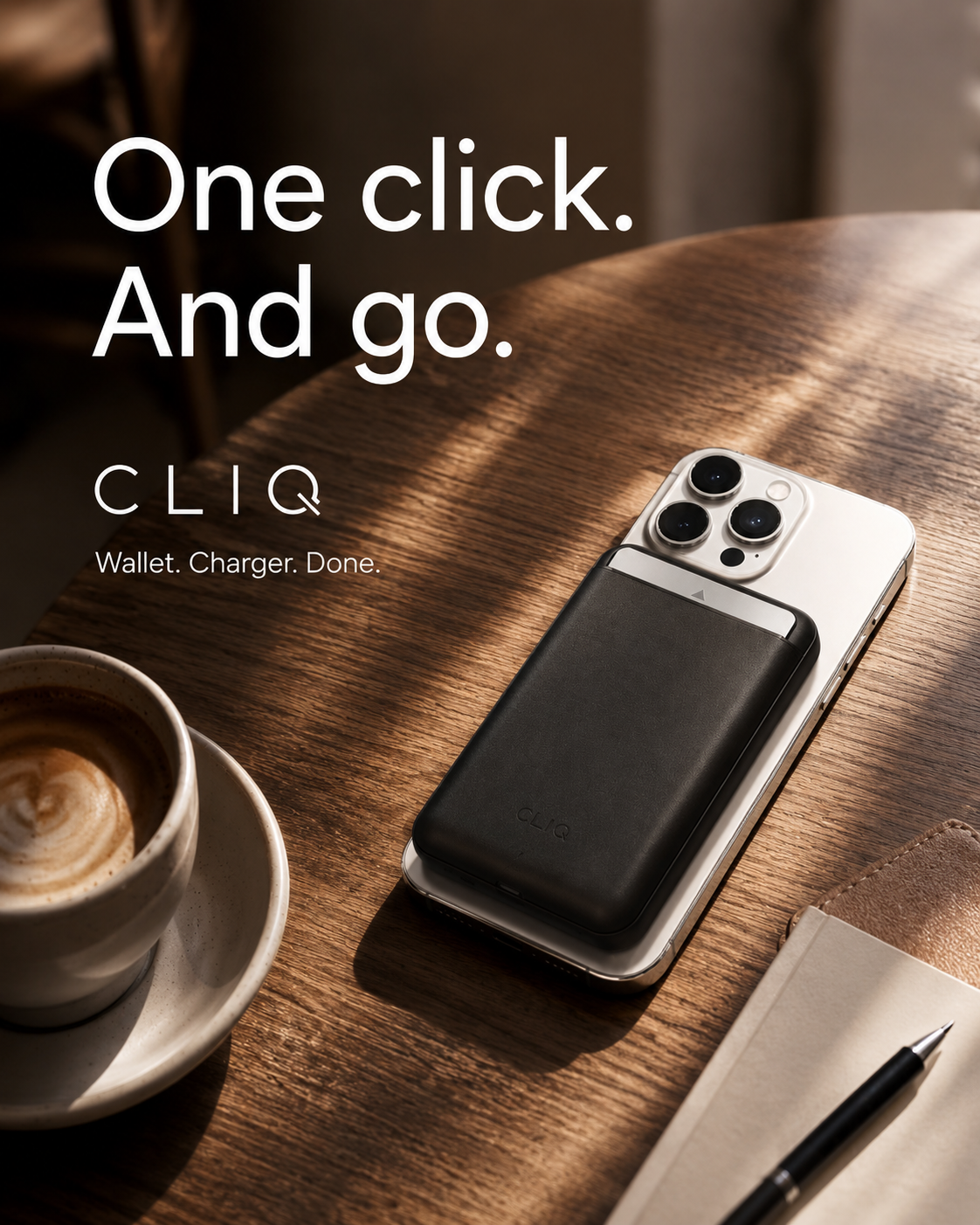
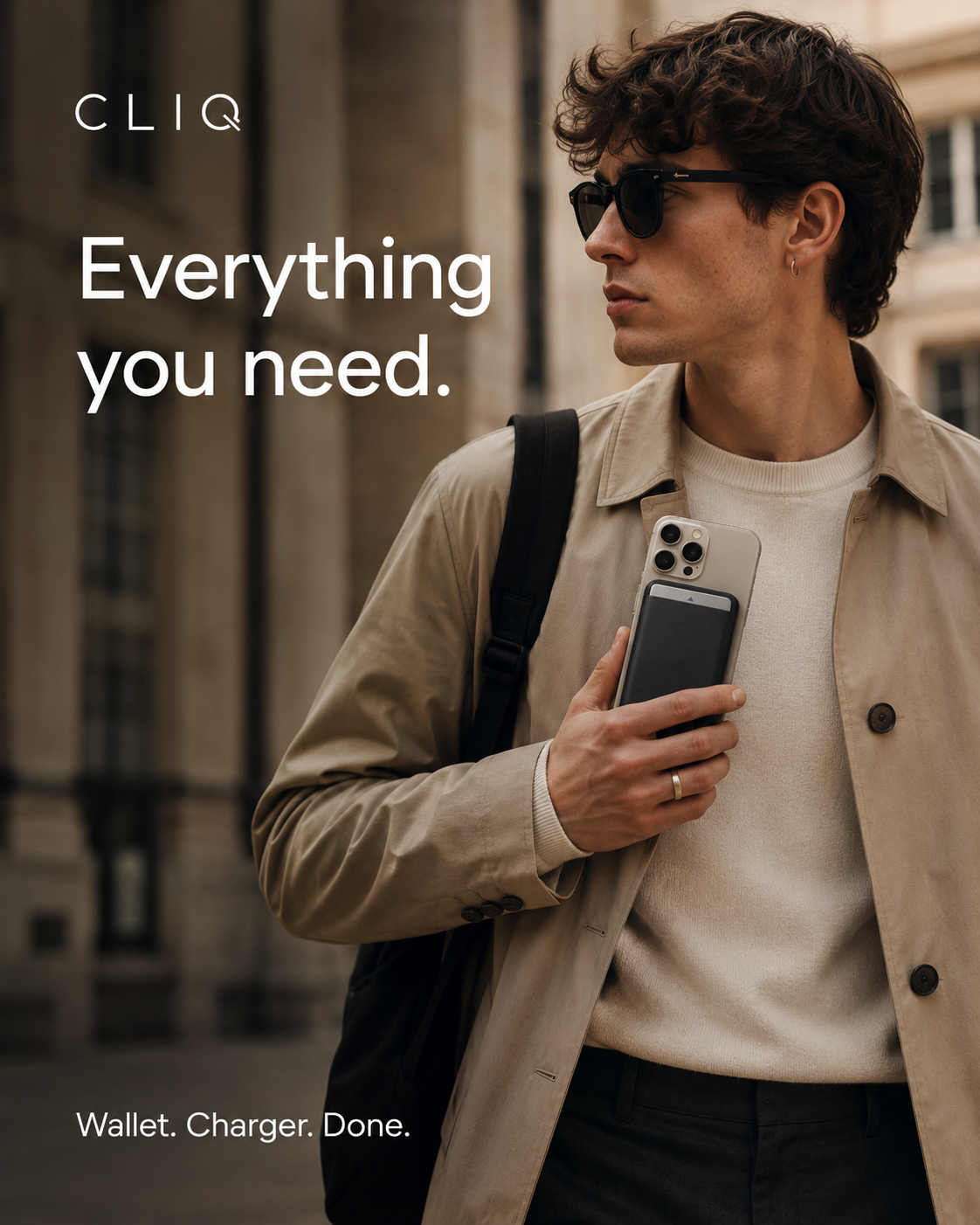
The visuals present a connected product and brand direction, from the initial problem to packaging and campaign applications.
These are concept visualisations and mockups. They communicate the proposed design; they do not demonstrate a manufactured product or verified charging performance.
Through CLIQ, I developed skills in creating a fictional brand and gained a better understanding of the wider branding process.
If I continued the project, I would like to learn more about building a community around a brand. This is also something I want to explore for BRONKZY, connecting what I learned through CLIQ to my own music project.
A low-tech communication concept helping residents of apartment buildings share their status and support each other during power outages.
The project with Amsterdam Police explored how citizens could act more independently during emergencies. Our group focused on social resilience during prolonged power outages.
The design challenge was to help neighbours communicate their status and needs when electricity and digital infrastructure were unavailable. The essential system had to remain usable without power.
The concept used physical green, orange and red status cards in an apartment building, alongside a central community board or hub. Residents could communicate their situation, making it easier to identify who needed help and who could offer support.
The interaction was intended to be simple and intuitive in a stressful situation, encouraging cooperation, trust and mutual aid. Any optional digital features would support the system when power was available, while the essential communication remained independent of electricity.
I handled all client contact with Amsterdam Police and presented our final prototype to them, including to a senior representative within the organisation.
Alongside communication, I worked on the prototype’s hardware and developed the idea for the final prototype in collaboration with my teammates. The final result was a shared group effort, with my contribution combining concept development, practical hardware work and client communication.
Presenting the final prototype to the client was part of my role. It brought the group’s design work back to the organisation whose brief had started the project.
The prototype explored a way to support communication and cooperation during a blackout. Its intended benefits are design goals, rather than demonstrated outcomes from a real emergency.
Through the Resilience project, I learned how important it is to maintain regular, clear communication with a client. Good client contact means staying in touch throughout the process, sharing progress and making sure we understand each other’s expectations.
An interactive art installation translating subtle choices into an audiovisual reflection of personality, making an invisible part of identity visible.
We usually recognise people through their physical appearance. Another Eye explored a part of identity we cannot directly see: personality.
Visitors entered an immersive environment and participated in an experience without initially knowing its personality-based purpose. Subtle choices and interactions informed an audiovisual response, using abstract moving visuals, colours, shapes and sound.
The aim was to offer a creative reflection of who someone might be in that moment. It was an invitation to reflect on identity, unconscious decisions and self-perception, rather than an accurate personality assessment.
I proposed the concept for Another Eye and built the early HTML prototypes while we developed the idea as a group. These prototypes helped give the interaction a form we could explore and discuss.
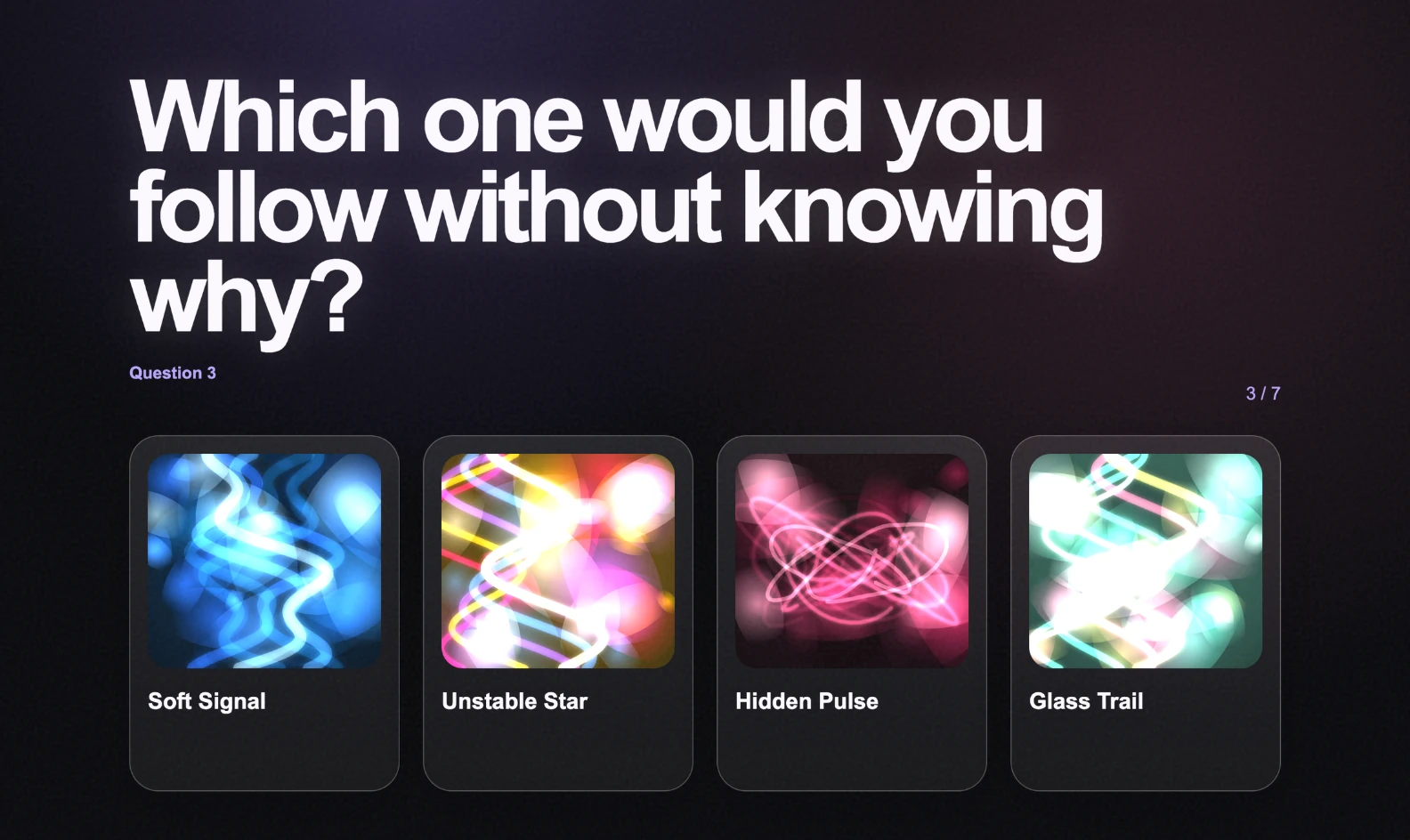
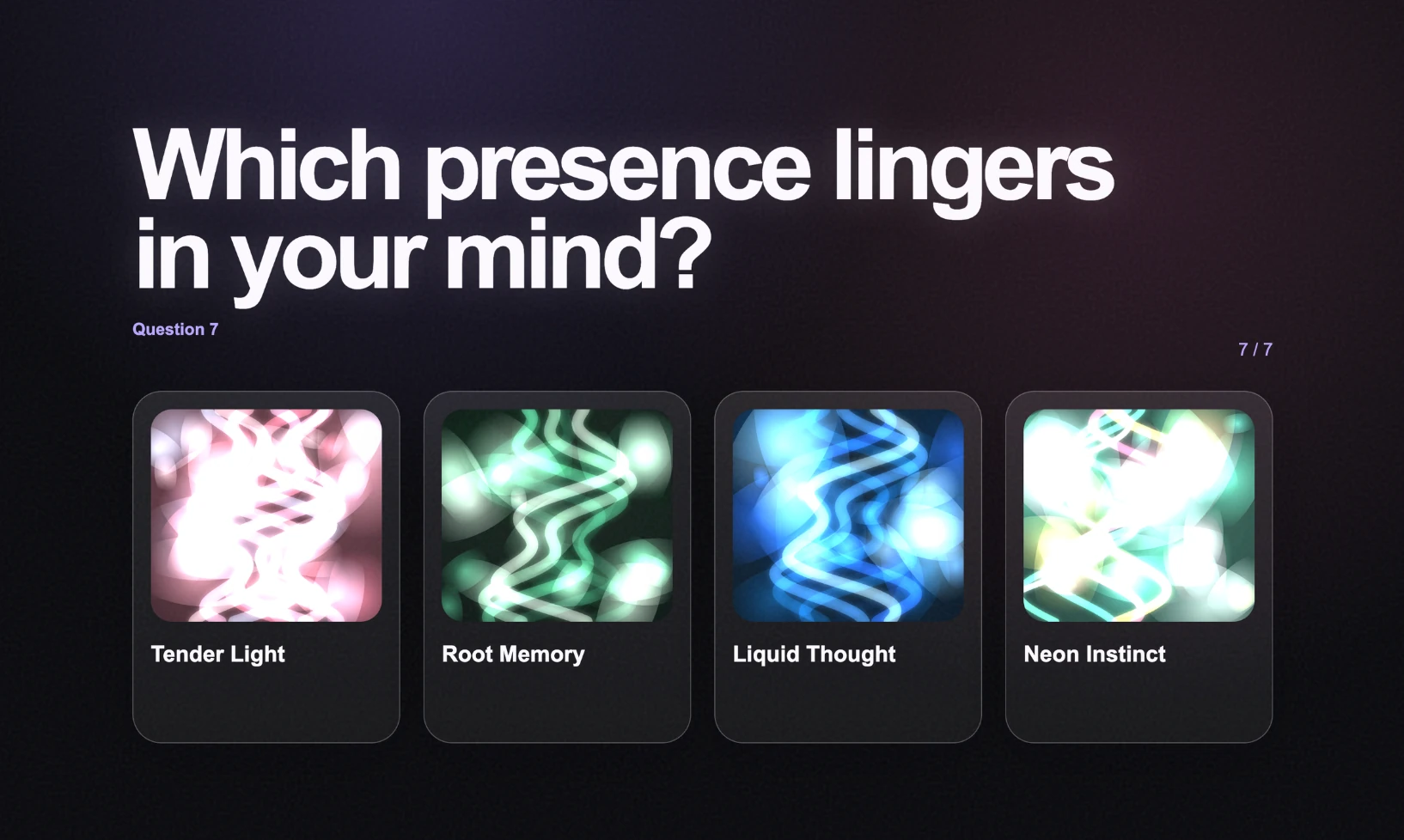
The screens below show the early experience: visitors choose between abstract visual directions before receiving an audiovisual identity reflection. They document the prototype stage; the final exhibition became a physical installation.
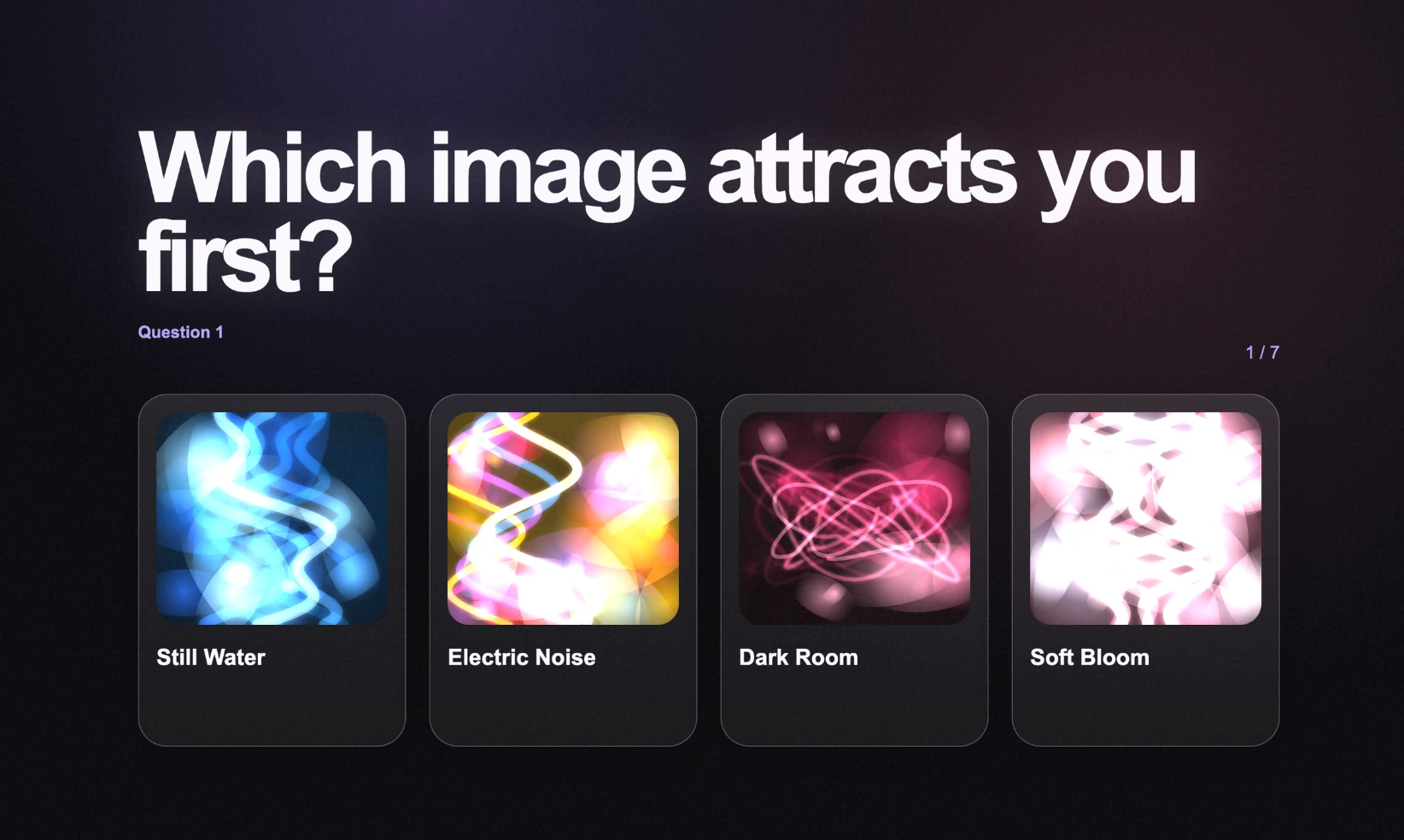
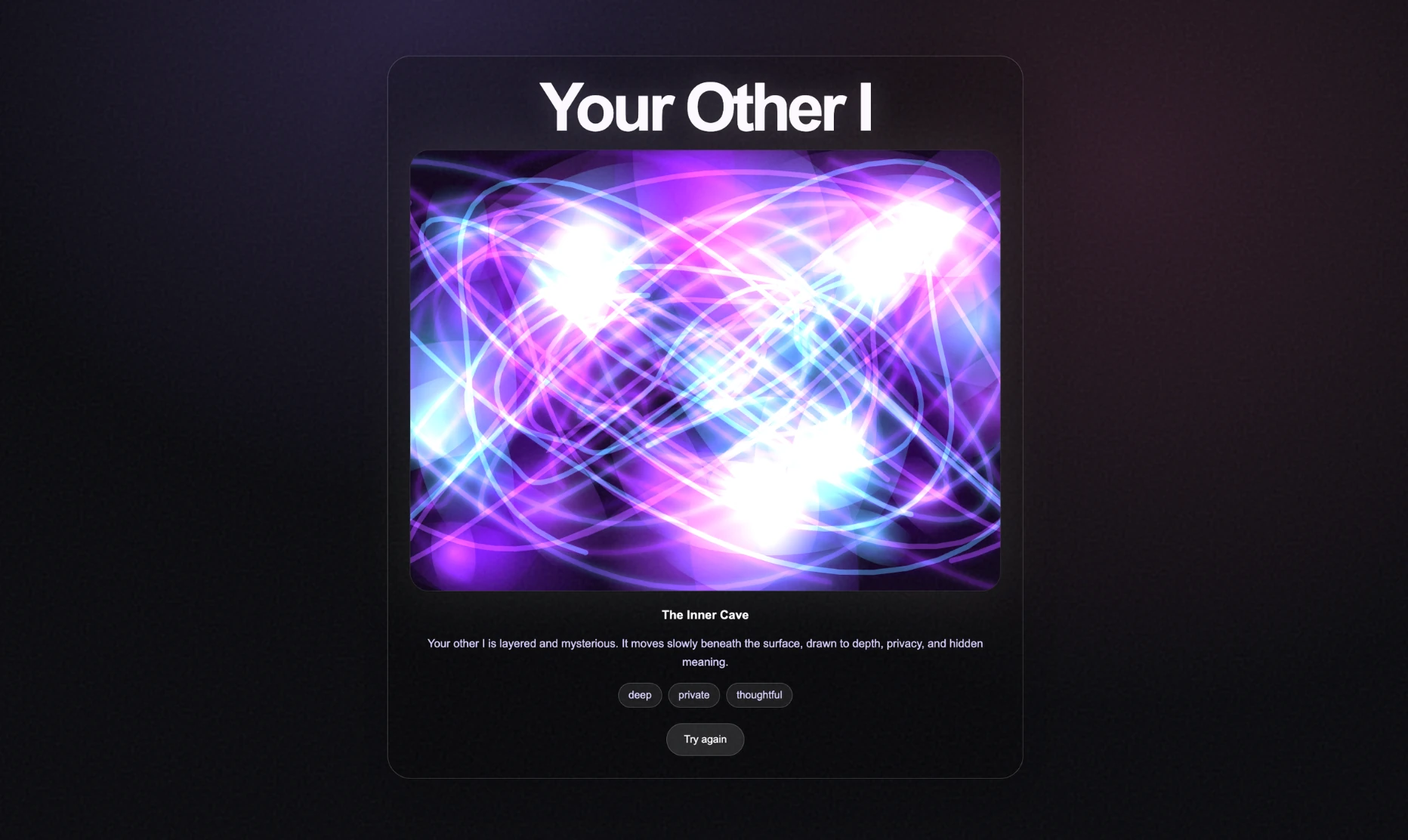
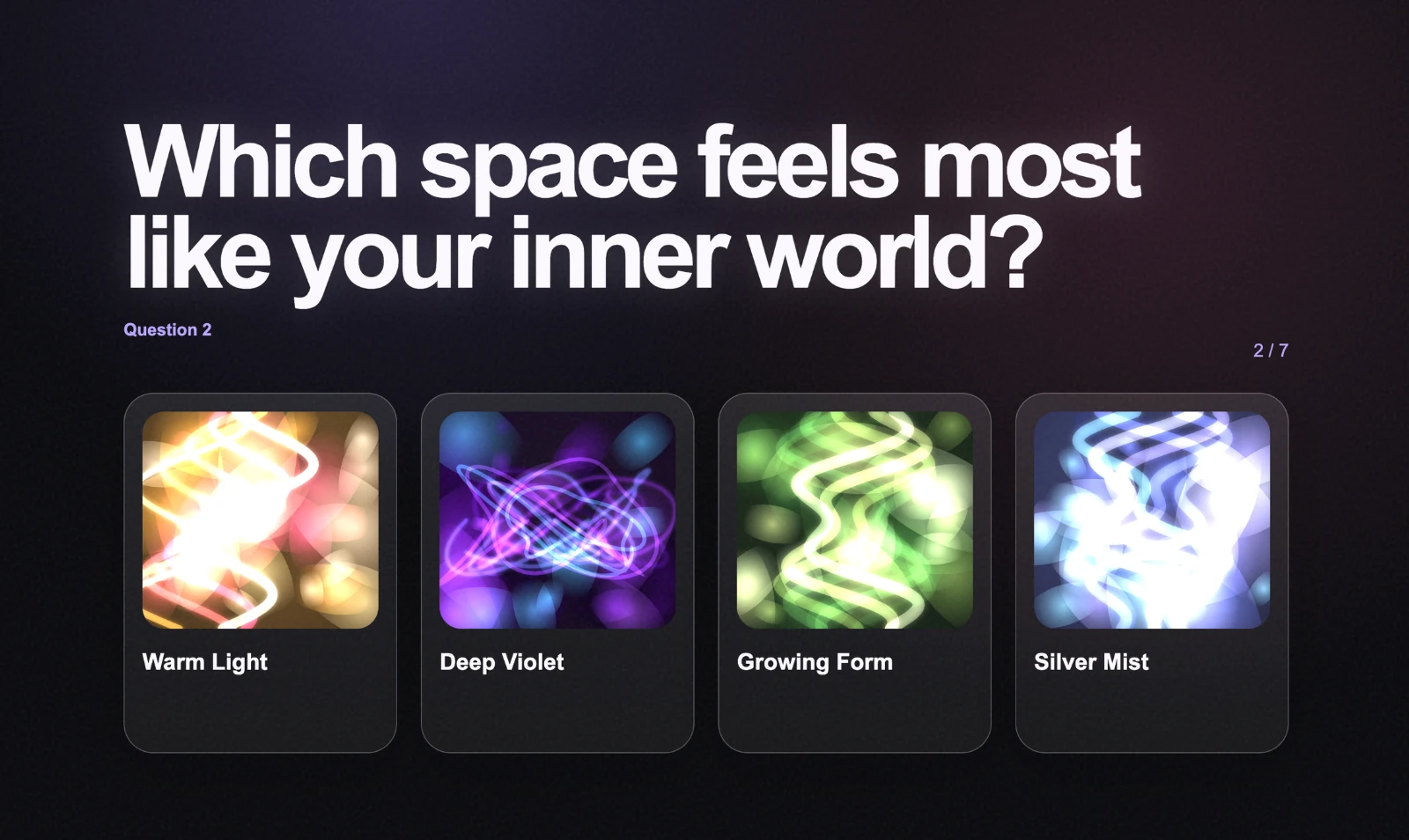
In the final stages, I focused on producing four soundtracks, one for each archetype, while continuing to lead the group. This brought my music production practice into the installation, using sound as part of its expression of identity.
Listen to the four archetype tracks below, alongside the introductory soundtrack.
As a team, we built Another Eye for an art exhibition hosted by our university. I spent a full week working on the installation, gathering resources, setting up and working with the sound system, and helping make sure everything was ready on time.
My role combined the creative direction with practical coordination. Bringing the concept into a real space depended on the work of the whole team.
Another Eye taught me how to conceptualise a larger project and lead a group through its development. I could not have realised it alone, and recognising that helped me understand how to be a better leader.
I also learned more about how identity can shape a final outcome. Translating an abstract idea about personality into visuals, sound and a physical experience showed me how different creative disciplines can work together.
A documentary I made in Kenya at 17, exploring drought and how young people experience its effects.
I made this documentary in Kenya when I was 17. It explores the effects of drought on local life, with a particular focus on how young people experience those changes.
I wanted to make the human impact of climate change more visible, bringing attention to experiences that can feel distant to audiences elsewhere.
The documentary aims to look beyond the wider climate problem and explore what its effects mean for the young people living with them.
I wanted to emphasise that this generation will help shape the future. Their determination and perspectives matter as we face the challenges of climate change in the years ahead.
The idea came from my dad, who was working with Justdiggit. Through that connection, Justdiggit helped me develop the documentary and get in touch with people in the Kenyan village I visited.
Justdiggit is a Dutch foundation working with local communities and partners to restore degraded landscapes in Africa. Its regreening work includes techniques such as semi-circular water bunds, which capture rainwater and help it soak into the soil so vegetation can grow again.
About Justdiggit: the organisation · rainwater harvesting
I carried out extensive background research on drought in Kenya and wrote the research myself. I also handled the interviews, filming and editing. My dad helped with filming the shots in which I appeared.
This meant taking the project from its background research through to the conversations in Kenya and the final edit.
One of the biggest surprises was how open the young people were to learning about ways to stop their land from becoming very dry. Some already knew a great deal about it, which stood out to me during the visit.
Interviewing through a translator was a new challenge. My questions had to be translated into the local language, and the answers translated back into English. At first, that made the conversation feel less direct. Over time, I still felt able to connect with the people I interviewed, even though we did not speak the same language.